Gombe Stream National Park with Jane Goodall

Comment

Gombe Stream National Park with Jane Goodall

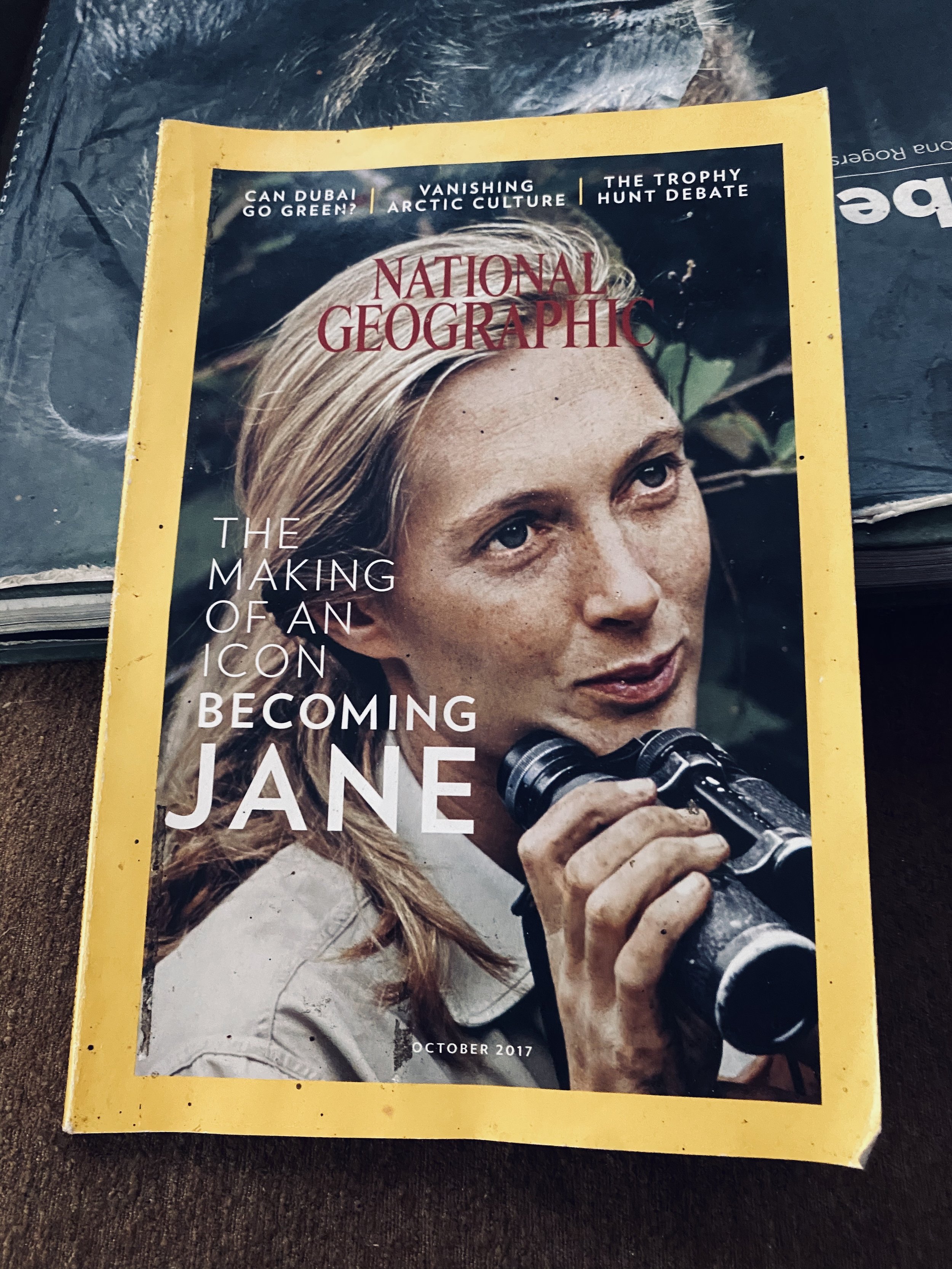
Gombe Stream National Park, founded by the extraordinary Jane Goodall in the 1960s, much of what we know about chimpanzees today is a result of the research completed at Gombe. One of my lifelong dreams was to visit Jane Goodall's research station at Gombe Stream National Park. 

Gombe is home to the longest-standing and treasured chimpanzee research program globally and Africa's most remote, authentic, and romantic adventures. It was an incredibly rare adventure opportunity to visit Gombe Stream, this off-the-beaten-track Park in Tanzania. It is also one of the smallest national parks in Tanzania. 

I have read many of Jane Goodall's books, and I made one of the best decisions of my life visiting Gombe National Park and experiencing the chimpanzees for myself. 
While the chimps are the main attraction, Gombe has much more. Home to rolling green hills, towering trees, steep valleys, and a thriving range of biodiversity – Gombe will leave you in awe from the moment you enter this wilderness wonderland.

Gombe is situated in the remote Tanzania jungles, on the banks of the second-largest freshwater lake in the world, Lake Tanganyika. Due to the remoteness of this National Park, it is only accessible by boat.

Your trip to Gombe will begin after arriving at Kigoma Airport. Unlike me, who made this journey by car from Arusha, a two-day trip on a bumpy road.

Once in Kigoma, I stayed at the stunning Kigoma Hilltop Hotel, treated to a delicious meal overlooking one of the most spectacular lookouts in the world. 

The following day a private boat will pick you up for the 2-3 -hour boat ride to Gombe National Park. 

The thriving green foliage, sparkling still water, and towering mountains around you that make up a small part of the Great Rift Valley as we approach Gombe National Park makes this one of the most scenic boat rides in the world. A few cheeky baboons were frolicking amongst the sandy shores. If the baboons are not out, about don't worry, your primate safari has only just begun.

Note: Charter flights are available as a transport option to Gombe, but a return ticket from Arusha costs about US$1,500pp.

Where to stay at Gombe National Park?

After an action-packed morning of adventure, there is nothing better than returning to your accommodation and relaxing by the lake with a delicious bottle of wine. 

Accommodation at Gombe is limited as less than 2,000 people visit the region each year. Fortunately, there are a few fantastic boutique lodges, so you do not need to compromise on comfort during your adventure. Here are our favorites:

 Mbali Mbali Gombe Lodge (approx. US$700 – $800pp/night all-inclusive)

In the lush shade of ancient forest trees just off the shores of Lake Tanganyika lies the small yet intimate Mbali Mbali Gombe Lodge. With a maximum capacity of 14 guests, Mbali Mbali offers a personalized, carefree luxury experience. With private luxury safari tents, delicious fresh Tanzania cuisine, and friendly service, Mbali Mbali is Gombe's most exclusive lodge. Mbali Mbali offers an all-inclusive experience, including accommodation, transfers, food, activities, WIFI, washing, and drinks.

What to do at Gombe National Park?

Hiking with the Chimpanzee's

We recommend you bring your walking shoes because the first activity you must do is a trek with the chimps. Together with a local guide, you will navigate through the vibrant Gombe forest until you locate a chimpanzee community. For the next 1 hour, you'll have the opportunity to observe wild chimpanzees in their communities, just as Jane Goodall did all those years ago. 

 Check out the other wildlife.

You can also expect to see other primates during your trek, including beachcomber olive baboons, red colobus, red-tailed monkeys, blue monkeys, and vervet monkeys. Gombe is the only place in the world where you can find red-tailed monkeys and blue monkeys hybridizing (mating with another primate species). If you're lucky, you may even spot one of these rare crossbreeds.  

 Jungle Trekking

Besides the incredible wildlife, you are bound to encounter, the trek itself is stunning! As you trek through some of Tanzania's most remote jungle, brace yourself for a jaw-dropping experience as you discover wild waterfalls and untouched panoramic lookouts over Lake Tanganyika. 

You will need to be reasonably fit to complete this trek as it typically takes between 3 – 5 hours to find the chimps, and the terrain is steep. You may also need to leave the track and bush-bash if the chimps are not in clear view. This will not be a problem if you are fit but slow (or just very determined). You will have your own private guide so you can set the pace.

 Water sports galore

For those of you who are more of the water adventurer types, Lake Tanganyika offers epic snorkeling, sailing, and fishing options guaranteed to quench the thirst of anyone curious about exploring these ancient waters.

And for those who must adhere to the call of a waterfall, be prepared to discover the many falling cascades, all perfect for a quick cool-off after your trek. 

Gombe National Park also provides several activities that are a little bit more laidback, such as bird watching or simply immersing in the natural orchestra around you. Otherwise, you can hire a private guide and enjoy one of the many nature walks in the area. You might even discover one of the original places Jane Goodall frequented when she began her observations of the chimpanzees. 

What is Gombe National Park's history?

Aside from Gombe's exotic inhabitants and activities that would make every adventurer drool, the Park also has a fascinating history. 

In the 1960s, Jane Goodall's love for animals and desire to see Africa inspired her to set out and observe the chimpanzees of Gombe. Remarkably, Jane had no previous higher education in scientific studies, working as a secretary. Nonetheless, Jane's work has resulted in countless discoveries about chimpanzees, including the ground-breaking discovery that chimps use tools, show emotions, and communicate in similar ways to humans. 

On my visit to Jane Goodall Institute at Gombe, I met with Anthony, an iconoclastic academic from the University of Edinburgh. He has been studying baboons and chimpanzees here at The Jane Goodall Institute at Gombe since 1975. Anthony communicated enormous information about chimpanzee behavior in his understated and transfixing manner. A community of chimpanzees is made up of four to eight dominant males, the leader of whom maintains his position not through brute strength and intimidation (though he must be strong), but also through a coalition with one or more of the other males. A male baby tends to stay with his maternal group, and the females are lured away or seek another troupe for better food and protection. The females in the community mate with all the males, though pairings tend to occur for periods regardless of whether the male is father to the female's offspring.

Anthony told me about a special relationship between the oldest female in the troupe, now aged 57, whose youngest son remained with her until last year when he died of pneumonia at the age of 13. The scientists believe that the chimps contract pneumonia and other bronchial infections through contact with humans, both researchers, and guests. Hence, there are many rules about keeping a distance of 10 meters from chimpanzees and not coughing or sneezing in their presence.


I asked whether chimpanzees are susceptible to HIV, as their DNA is closely related to ours, and I believed the theory is that HIV crossed over to humans from contact with green monkeys. According to Anthony, it is now proven that the HIV jumped from chimpanzees in the Congo, where people do kill them for bushmeat. 

The virus was amplified due to the human population in the '70s because of loggers, truckers, and prostitutes and also because unsterilized needles that were routinely used for vaccinating hundreds of patients at a time. 

In the three Gombe chimpanzee communities, 16% are known to be infected with HIV, and some have apparently died from it.


 Describing a place like Gombe in a blog is near impossible. It's unlike any other adventure you'll ever embark upon. We love Gombe, and it's easy to see why the Park has become one of our favorite Tanzanian experiences. 


From the pan-hoot calls echoing throughout the jungle to being meters away from an animal that shares 98% of our DNA, Gombe is an unforgettable experience that you'll remember for the rest of your life.

Comment

Volcanoes National Park- Gorilla Trek - Rwanda

Volcanoes National Park- Gorilla Trek - Rwanda

Rwanda, known for its breathtaking scenery, Rwanda is often referred to as le pays des mille collines (French: "land of a thousand hills"). One of the smallest countries on the African mainland, its capital is Kigali, located in the center of the country on the Ruganwa River.

IMG_2961.JPG

1,000,000 Rwandans were brutally killed over 100 days, more than 25 years ago?

As far as I know, Kigali is built on four hills, is the most dynamic, impressive city in Africa outside African borders. Perhaps the most important 'attraction' is the Kigali Genocide Memorial & you should pay a visit, preferably at the start of your holiday, to understand the history & the DNA of this country.

IMG_2936.JPG

Rwandans have made great strides & efforts in moving past the tragedy of genocide in 1994. I spent the first night at Mille Collines Hotel, aka Hotel Rwanda, but please do not call it by that. Hotel Rwanda was a Hollywood blockbuster movie that highlighted the atrocities during the 1994 Genocide against the Tutsi. ... However, the story told in the award-winning film is pure fiction and does not provide a real and accurate picture of the events between April and June of 1994. Many locals will get upset if you call it Hotel Rwanda. It has plenty of history as well as beautiful views over the capital.


The excitement starts building up as we set off to Volcanoes National Park Head Quarters. The town itself, located only 25km from the Uganda border, is relatively a small city of about 70,000 people. Here, we registered to track the rare Golden Monkey.

The elusive Golden Monkey is a beautiful and distinctive bamboo-associated primate of the blue monkey family, endemic to the Albertine Rift Valley.

Then we headed to Sabyinyo Silverback Lodge, which would be our base for the next two days.

The big day for gorilla-tracking in Rwanda has finally arrived. We leave the lodge at 6.30 am the next morning to be at HQ for 7 am registration. There are 80 gorilla permits available each day, with a maximum of eight trekkers visiting any one group. Once the trekkers are put into groups, each group's Lead Guide briefs the trekkers of the trekking procedures and the "do's and don'ts" while you are in the presence of the gorillas.


After the briefing, the trekkers return to their respective vehicles to drive up the mountain to the starting point. Trekking can take two to six or more hours if the gorillas move before the park rangers locate them the next morning.

We drove 20 minutes and started gorilla-trekking at 9.30 am. The first hour of the trek was outside the forest with easy walking. We then headed into the forest, which was a little harder but not too tricky. 

We got to the top, but then we needed to hike down into the crater. There was no path. The trackers created a path with machetes.

That will give you an idea of how thick the forest is; there is no path other than our patch we opened with a machete.

 It took us 2½ hrs to find gorillas, including the challenging hike into the crater. Finally, we came across the Susa group, the most fascinating group of the Gorilla Families in Rwanda and the largest in Volcanoes National Park. The group contains two twins known as Impano and Byishimo born to Nyabintondore. This group had an internal conflict in 2008, and 15 split from 42 with two silverbacks. This was the first group where Diane Fossey, the famous primatologist, studied mountain Gorillas. This group is the most preferred by tourists and also the hardest to track. They live at the base of Mount Karisimbi ( which we climbed earlier). The name Susa was derived from River Susa, which runs through the Susa family home. Susa group also boasts of the oldest gorilla born in 1976, known as poppy. The first encounter we had was silverback matching past us. 

A very young one came up behind me playing on an elevated hillock, and yes – he did do the whole chest-beating too…..just because he can.


 The silverback is the center of the troop's attention, making all the decisions, mediating conflicts, determining the group's movements, leading the others to feeding sites, and taking responsibility for the safety and well-being of the troop. Younger males subordinate to the silverback, known as blackbacks. They can serve as backup protection. Blackbacks are aged between 8 and 12 years and lack silver back hair.

The bond that a silverback has with his females forms the core of gorilla social life.

The silverback took the path we had cut open, and a few of the others followed too. We started to follow them. Halfway up, trackers told us to stand to the side as more gorillas were following the silverback (as they do). A most fantastic experience to see a few gorillas marching through…almost squeezing past us. 

We followed them to the top where they were camping out, playing, rolling, young doing chest-beating, spending an hour in their presence. We then reluctantly hiked back and, once outside the forest, took the short route to Sabinyo for a second night.


Mountain Gorilla Families

In the Volcanoes National Park in Rwanda, there are over twenty families of Mountain Gorilla, comprised of around 280 individual gorillas living on the Virunga Volcanoes slopes. Of these twenty families, twelve families are visited, with ten families being visited each day. The Parks Authority rotates the families that you trek to see daily. For many, seeing gorillas in the wild offers a wildlife experience of a lifetime.

For those interested in seeing the Mountain Gorillas in their natural habitat, Sabyinyo Silverback Lodge in Rwanda offers the perfect location to base yourself. Sabyinyo Silverback Lodge is located only 15 minutes drive from the Volcanoes National Park headquarters, the Gorilla treks' starting point.

Gorilla treks take place in the morning and depart from the Park Headquarters at around 07:30 am. Before departure, you are given a briefing by park staff, assigned a gorilla family to visit, and rangers to guide you. The treks take place on the Virunga Volcanoes slopes, and clients should be in the good physical condition as some of the treks can be physically demanding. The treks typically start in the cultivated land on the volcanoes' base, and then you are guided up into the beautiful dense misty forests. The trek typically lasts between 2 and 5 hours depending on the gorilla family's location, and a maximum of eight visitors is allowed per gorilla family.

Once you reach the gorillas, you are permitted to stay for one hour to view them. The minimum age for gorilla trekking in Rwanda is 15 years. A maximum of 80 gorilla permits are issued per day, and during the high season, these sell out far in advance. It is therefore essential to book gorilla permits as early as possible. Gorilla Permits currently cost USD$ 1500 per person per trek.

If you are interested in planning a gorilla trekking safari, please contact us. We would be happy to answer any questions you may have, advise you of the current availability of gorilla permits, and help you plan your safari.


Volcanoes National Park, Rwanda 

Quick Facts:

Spanning on a 160sqkm area in the northern part of Rwanda, Volcanoes national park is the oldest national park in Africa, first gazetted in 1925. It was initially a small area around Karisimbi, Mikeno, and Visoke volcanoes to protect the Mountain gorillas from the threat of extinction due to poaching.

Details

In 1929, the park's borders were extended further into Rwanda and into the Belgian Congo to form the Albert National Park. During the early 1960s, the park was divided as Rwanda and Congo gained their independence and by the end of that decade, the park was almost half of its original size.

The park was the base for the zoologist Dian Fossey who researched mountain Gorillas. She established her research base between Visoke and Karisimbi volcanoes in 1967 and spearheaded the conservation campaign of the mountain gorillas and mobilized resources to fight against poaching in this area, a fight she put up until her murder in 1985.

The Volcanoes National Park became a battlefield during the Rwandan Civil War, with the park headquarters being attacked in 1992. The research center was abandoned, and all tourist activities (including visiting the gorillas) were stopped. They did not resume until 1999 when the area was deemed safe and under control. The park continued to suffer at the mercies of poachers though conservation efforts were also underway. In the early 1990s, the park became a battlefield for Rwanda's civil war.

Volcanoes national park is home to Mountain Gorilla (Gorilla beringei beringei); golden monkeys (Cercopithecus mitis kandti), Spotted Hyena (Crocuta crocuta), buffaloes (Syncerus caffer), elephants, black-fronted duiker (Cephalophus niger), and bushbuck (Tragelaphus scriptus). The park also harbors 178 bird species, including at least 29 endemics to Rwenzori mountains and the Virungas.

Thank you to 7SummitAfrica

Gorilla Trekking in Virunga National Park

Comment

Gorilla Trekking in Virunga National Park

Photo by Grant Tiffen /Shutterstock

Democratic Republic of Congo

One of my most memorable African experiences is, hands down, the time I spend with Gorillas. Words can't describe the feelings you get when you come up and close with these gentle giants, with whom we share 98% of our D.N.A.

The night before our trek, we stayed at the  Mikeno Lodge, situated alongside Virunga National Park's ranger headquarters – Africa's oldest Park. The ideal base for discovering this World Heritage Site's incredible biodiversity. The lodge's 12 bungalows offer luxury accommodation built of lava stone, and it's close to an active, bubbling volcano, Mahogany, and thatch. It's an impressively stylish escape in the heart of untouched Africa.

Need I say more?

Quick Facts:

www.virunga.org  is a strategic partner to the 7SummitsAfrica Expedition. We were proud to be associated with a park that has been through so much over the years and defied all odds to still not just exists but also to be custodians of a quarter of the World's endangered mountain gorillas.

Virunga and their team conserve the most dangerous national park on the planet. 

Virunga National Park is a UNESCO World Heritage Site in the northeastern Democratic Republic of Congo and borders Uganda and Rwanda. Virunga is Africa's oldest national Park, established in 1925, and is also the most biologically diverse protected area on the African continent. The Park is 7800 square kilometers (3000 square miles) in size and includes habitats like forests, savannas, lava plains, swamps, erosion valleys, active volcanoes, and the peaks of the Rwenzori mountains, also referred to as the "mountains of the moon."

Virunga is home to about a quarter of the World's critically endangered mountain gorillas. The Park's two other Great Ape species, eastern lowland (Grauer's) gorillas and chimpanzees, make Virunga the only park in the World to protect the habitat of three taxa of Great Apes. The Okapi, an endangered species that resembles a zebra but is more closely related to the giraffe, is the other main attraction to the area. Large colonies of hippopotami, forest and savanna elephants, lions, and numerous rare bird species are also be found in the Park.

Virunga national park is in charge of protecting the Congo Basin's forests that contain the most significant number of mammals, primates, birds, amphibians, fish, and swallowtail butterflies in Africa, more than a thousand species of birds. The Congo Basin is the only place to shelter all three subspecies of gorilla: the western lowland gorilla, the endemic eastern lowland gorilla, and the endangered mountain gorilla.


Very few tourists come to Congo. When tourists come to Congo, they typically obtain a visa to see the mountain gorillas or hike the Nyiragongo Volcano.  

To be completely clear, the situation in Congo always changes. It could be safe for one month or even one year, but tensions are constant and could quickly become a dangerous situation. When we were there in 2017, there were no conflicts at the time. However, shortly after ( the following weekend, there have been attacks, and safety is becoming an issue again. Please check with your government as to the latest situation in Congo. Contacting the Virunga National Park is also a good idea to find out if they are doing tours and to ask about the safety when you expect to visit.

Despite all the instabilities, fighting, and difficulties in conservation, the Virunga National Park is still considered and African gem and a unique travel destination, as it’s one of the oldest parks in Africa with the highest rte of biodiversity in the world! Not to mention it’s home to one of the most active volcanoes in the world, Nyamuragira and Nyiragongo, which an be climbed as separate activity while in the DRC.


 Mountain Gorilla Treks

Virunga N.P. in Congo has nine families consisting of 153 mountain gorillas (and growing) in the wild. Congo is the cheapest place to go on a gorilla trek. There are two rainy seasons, between March through May as well as October and November. It is best to go on a gorilla trek for the rest of the year during the dry seasons. Unlike tours in Uganda and Rwanda, gorilla trekking in Congo does not book up. It is easy to get permits as well as setting up last-minute trips. While we were in Goma, it was possible to set up a trek for the following day. Because of the low tourism to Congo, there are minimal crowds while trekking. The time on the trek itself depends on where the gorillas are. Trackers will be ahead of the group looking for the gorillas. It could take under one hour or several hours to get to the gorillas. Once the group is with the gorillas, one hour is spent on this incredible experience. The cost for a gorilla trek in Virunga N.P. is $400 USD. 

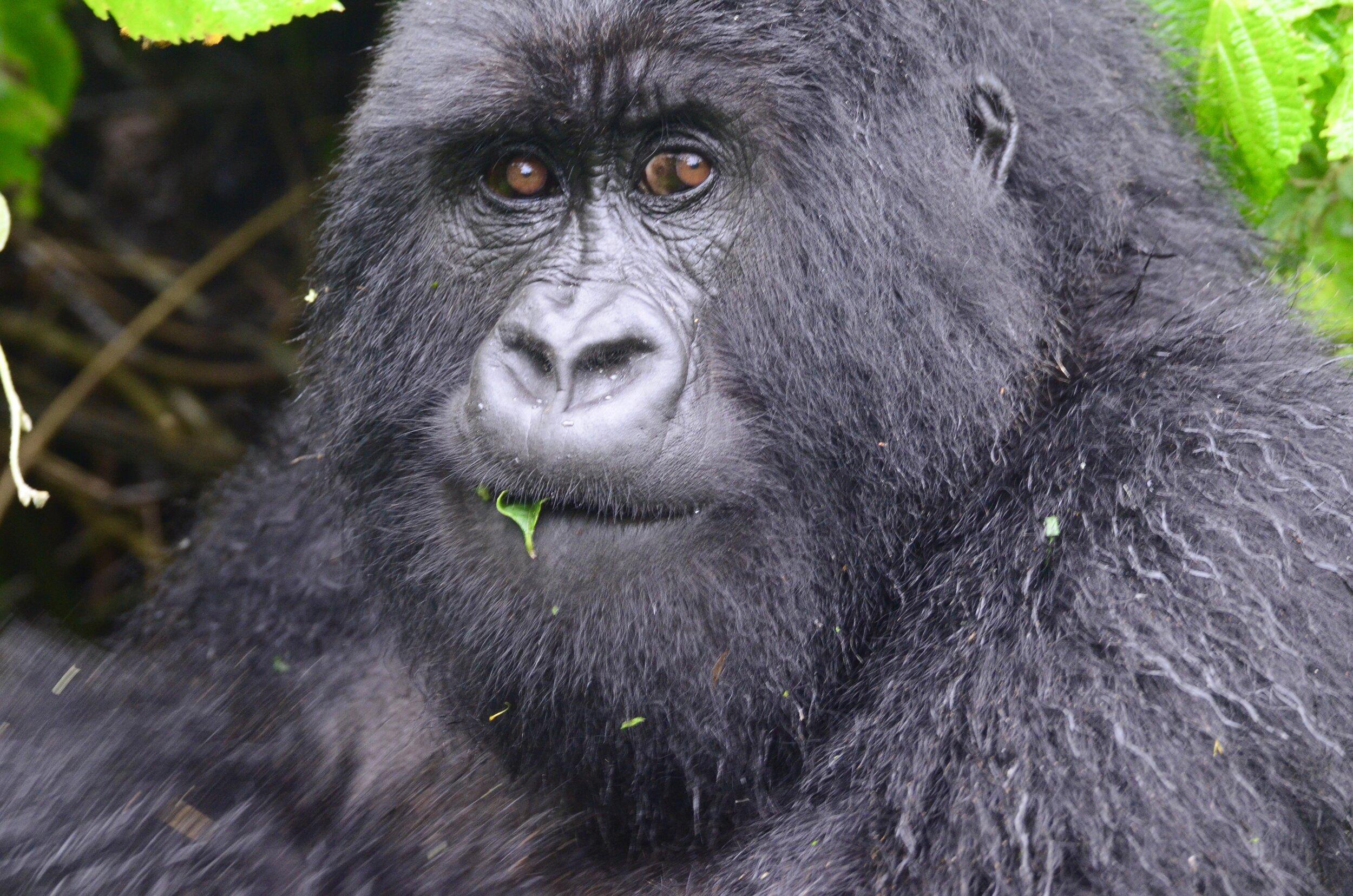
Trekking through the Virunga jungle dislike nothing else. It is thick, trails are non-existent, and sometimes, the scrub beneath is so dense that you aren’t even touching the ground anymore, you could literally be a meter off the ground below, suspended by incredible plant life. I never forget the moment, after hours of trekking through luscious , green farmlands, torrential rains coming down on us and then arriving at the top of the hill, our guid points in one direction. I look over, and bam- there is a silverback gorilla! I am amazed, yet a bit nervous at how close I am. Observing this massive animal in his daily routine, surfing his face with leaf after leaf- enthralls me. The ranger pulls out a machete and hacks away at a bush uncovering a mother and baby gorilla. A huge smile immediately covers my face. I stand completely still and turn my head back to the Silverback. I hope his isn’t upset that I’m so close to his family, but the Silverback is just chilling, making me realize I don’t have to be as nervous.Instead, I need to enjoy this unique wild animal experience.

Photo Travelstock


Gorilla trekking is the real deal, and you need to be prepared for the day, and you need to pack certain things as it can last for 1 hour or 8 hours. You also want to wear the right clothes as trekking through the jungle can be unforgiving during a storm.


I hiked with the mountain gorillas in Rwanda a few years back. I have fond memories of that experience, but I must say that the Congo is something else. It is much more of a rustic and "authentic" African experience if you want to call it that. No one visits the D.R.C., which is a huge shame really because they could use the tourism dollars, and the experience is unlike anything else. Because of this, our team was the only one on this day. That means the time we had with the gorillas was all to ourselves—no need to worry about other obnoxious tourists with their cameras chasing away the gorillas. 

Photo by Gabriele Brown

Photo by Gabriele Brown

It was like a dream from my childhood, many many years back, I had this vision following in the footstep of Livingston exploring Africa on foot.

I think I was eight or nine years old and pretending to be backpacking in Africa. A wooden stick was my machete, clearing the bush for me. Fifty years later, this play became a reality, and I trekked in Virunga National Park's thick bush. It has been raining for days, and that day was no different. We had a torrential downpour for hours, and we all were soaking wet as we continue up the mountain in hopes of seeing the Gorillas. I had tears to my eyes as I worked my way through the thick shrubs with the ranger upfront cutting it with his machete, just as imagined many years back as a child. Dreams do come true, I knew at that moment, and it made me so extraordinaire happy that I lived out my childhood dream.

After about 5 hours, the rain stopped, the sun was out as we stopped at a clearing, and here they were..... our Gorilla family.

IMG_4481.jpeg

I am so happy I visit the Congo, I participated in two unique travel experiences. ( Seriously, it is hard for me to think of a better experience). I got to met Silverback gorillas in their natural habitat and hike to the largest lava lake in the world!

Photo by Gabriele Brown

Photo by Gabriele Brown

No matter how much you prep for your mountain gorilla trekking experience,  nothing can prepare you for the moment when you come face to face with these incredible creatures. 

Comment

7SUMMITAFRICA

7SUMMITAFRICA

“Conservation and job creation through Tourism, to areas where it is needed most, is the long term goal.”

Carel Verhoef